CodeInk — Cycling Maps
Liège–Bastogne–Liège Map Art
Exclusive to CodeInk art · 3D flyover included
A human-designed cycling artwork of the Liège–Bastogne–Liège course, La Doyenne, from Liège to Bastogne and back through the Belgian Ardennes, physically plotted with ink on 250 gsm paper in Québec City.
- ✓Physically plotted with ink on 250 gsm paper
- ✓Created to order in Québec City
- ✓Personal production timelapse included
- ✓Made to order in Québec City
- ✓Unframed — fits standard 11 x 17 in frames
- ✓Free shipping — Canada only
- ✓Free replacement if damaged
Liège, Belgium. Plotted in real ink, one line at a time, on 250gsm paper.
The course in numbers
Distance
262 km
The course
The Liège–Bastogne–Liège course, 262 km from Liège to Bastogne and back over the climbs of the Belgian Ardennes — La Doyenne, the oldest Monument of cycling.
This course leaves central Liège and heads south across the provinces of Liège and Luxembourg to Bastogne, then returns north on a far more winding road, where the climbs of the Ardennes follow one another — Stockeu, Haute-Levée, La Redoute and La Roche-aux-Faucons among the best known. In the final 15 kilometres, the landscape shifts from Ardennes meadows to the post-industrial districts of Liège. The highest point is at 566 metres and the main climb, about 283 metres, comes between km 30 and km 42. This is the exact route plotted here — every turn at its precise intersection.
- Start
- Liège
- Finish
- Liège
- Main climb
- ≈ +283 m between km 30 and km 42
- First edition
- 1892
- Nickname
- La Doyenne (The Old Lady)
- Most wins
- 5 — Eddy Merckx
The History
The oldest of the classics, in 1892
Liège–Bastogne–Liège was first raced in 1892, for amateurs, from Spa to Bastogne and back, over 250 kilometres. It is the oldest of the five great classics, hence its nickname, La Doyenne — the Old Lady. Of 33 starters, 17 finished; some, exhausted, abandoned in Bastogne and took the train home. Liège native Léon Houa won in 10 hours and 48 minutes.
Liège–Bastogne–Liège, since 1908
The race resumed in 1908 with, for the first time, a start and finish in Liège. It has always stayed in the hilly, French-speaking south of Belgium, where Liège and Bastogne are. After the Second World War it became a major fixture of the international calendar.
Merckx, Hinault and “Neige–Bastogne–Neige”
Eddy Merckx won it five times, three in a row — a record. In 1980 snow fell from the start and temperatures hovered near freezing: people called it “Neige–Bastogne–Neige”, Snow–Bastogne–Snow. Bernard Hinault attacked 80 km from the finish and won by nearly ten minutes.
La Redoute and the return to Liège
The Côte de la Redoute, 2 km at nearly 9% on average with sections over 20%, was long the decisive point of the race. From 1992 to 2018 the finish was in Ans, at the top of the Côte de Saint-Nicolas; since 2019 it has been back in central Liège, after La Roche-aux-Faucons.
Why This Ride
Liège–Bastogne–Liège is La Doyenne: the oldest of the great classics, a dozen Ardennes climbs, often rain, sometimes snow, and La Redoute in the distance. Here, it's the whole course, Liège to Bastogne and back. Your ride, preserved in ink, one line at a time.
Make the Achievement Yours
Add a name, finish time or short dedication to turn the artwork into a personal record of the work behind the medal. Personalization is optional; leave the field blank for the original composition.
How It Is Made
The composition, hierarchy and final linework are directed by a person. A pen plotter then draws the artwork physically, line by line, with ink on paper. Small production variations can occur during physical plotting.
Plotted by a robot. Designed by a person.
Specifications
> FORMAT: Tabloid Standard [11" x 17" / 27.9 × 43.2 cm]
> INK SYSTEM: Stabilo® Fineliner / Sakura® Gelly Roll
> SUBSTRATE: 250gsm High-Density Stock [120lb]
> EXECUTION: Precision Vector Plotting
What you get
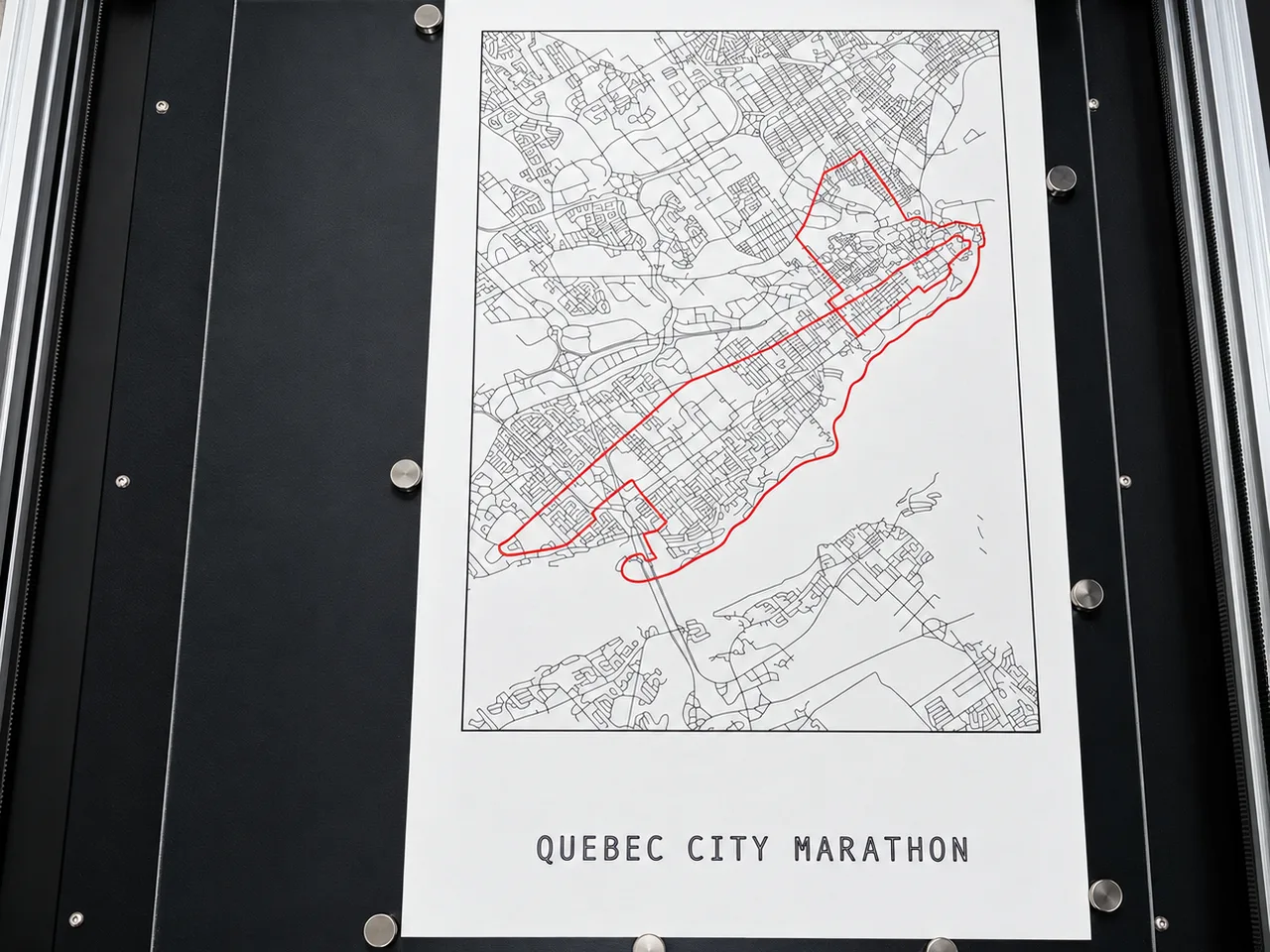
Your piece, plotted in pen
Your name and your time, plotted in ink under the title.
Production timelapse included
The timelapse of your piece being plotted, sent with your order.
Example timelapse — you get the one of your own piece.
A signature only UV light reveals
Serial number, year and Québec City, plotted on the back in UV ink.
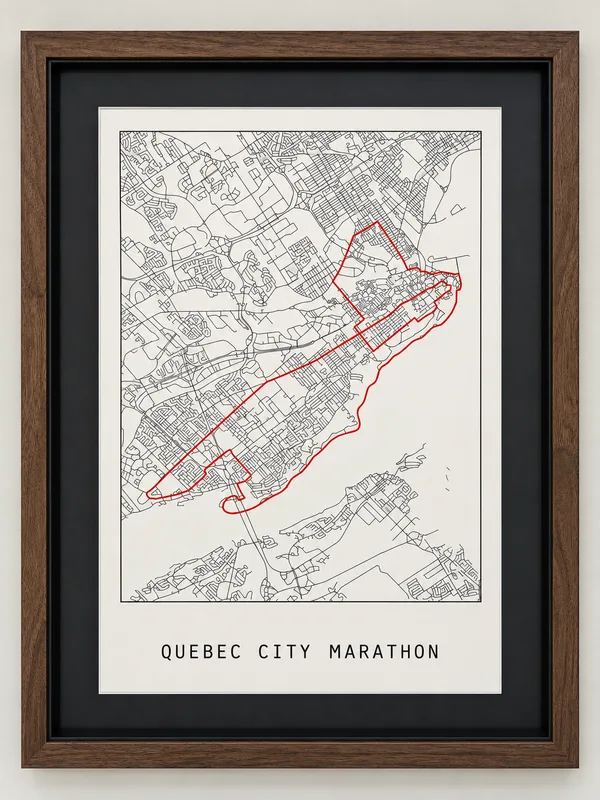
On your wall
Standard 11 × 17 in (27.9 × 43.2 cm): it fits any off-the-shelf frame, so you can pick the one that suits your space.
Frame not included.
A real process, not a printer
Each piece is physically plotted, pen on paper, in Québec City — watch the machine work.
Watch the process14-day returns
Real defects — shipping damage, wrong colour, missing lines — are replaced free of charge.
Read the policySecure checkout
Payments are processed by Stripe. CodeInk.art never sees or stores your card details.
Numbered and signed
A unique serial number and the date are plotted on the back in UV ink — invisible to the naked eye, laid down in the same pass as the drawing.
Independence
Independent artwork inspired by the event named above. CodeInk.art is not affiliated with or endorsed by the organizer.
General questions (size, frame, timelapse…) → The Process
Questions & Answers
Everything you need to know
> STATUS: RESOLVED
Because it's the oldest of cycling's five great classics: its first edition dates from 1892.
> STATUS: RESOLVED
About a dozen climbs line the return to Liège, including Stockeu, Haute-Levée, the Côte de la Redoute — 2 km with sections over 20% — and La Roche-aux-Faucons, the last named climb.
> STATUS: RESOLVED
Eddy Merckx, with five wins. Moreno Argentin and Alejandro Valverde have won it four times each.
> STATUS: RESOLVED
In central Liège since 2019. From 1992 to 2018 the finish was in the suburb of Ans, at the top of a final climb.
> STATUS: RESOLVED
At the end of April. It closes the spring classics and the Ardennes week, after the Amstel Gold Race and La Flèche Wallonne.
> STATUS: RESOLVED
Bastogne is the turnaround: the outbound leg heads south to this Ardennes town, then the way back to Liège strings the climbs together. On the map, Bastogne comes around km 102.
> STATUS: RESOLVED
The last listed climb, about fifteen kilometres from the finish, short and steep. The race is often decided there.
> STATUS: RESOLVED
Yes: Liège-Bastogne-Liège Femmes has been raced since 2017, on the same day as the men's race.
Don't see your race?
Request your gran fondo, ride or a personal route: we plot any course on request.