CodeInk — Cycling Maps
Milan–San Remo Map Art
Exclusive to CodeInk art · 3D flyover included
A human-designed cycling artwork of the classic Milan–San Remo course, cycling's longest Monument, from Milan to the Ligurian Riviera, physically plotted with ink on 250 gsm paper in Québec City.
- ✓Physically plotted with ink on 250 gsm paper
- ✓Created to order in Québec City
- ✓Personal production timelapse included
- ✓Made to order in Québec City
- ✓Unframed — fits standard 11 x 17 in frames
- ✓Free shipping — Canada only
- ✓Free replacement if damaged
Milan → Sanremo, Italy. Plotted in real ink, one line at a time, on 250gsm paper.
The course in numbers
Distance
294 km
The course
The classic Milan–San Remo course, 294 km from Milan to Sanremo across the Po plain, over the Turchino and along the Ligurian Riviera — the first Monument of the season.
This course leaves Milan and heads southwest across the plains of Lombardy and Piedmont, through Pavia, Voghera, Tortona, Novi Ligure and Ovada. Entering Liguria, it crosses the Passo del Turchino, the highest point of the course at 527 metres, then reaches the sea at Voltri and follows the Aurelia west: Savona, Albenga, Alassio, Imperia, with the capi — Mele, Cervo and Berta. At San Lorenzo al Mare it climbs the Cipressa — about 234 metres between km 262 and km 271 — then the Poggio di Sanremo, before diving down to the finish in Sanremo. This is the exact route plotted here — every turn at its precise intersection.
- Start
- Milan
- Finish
- Sanremo
- Main climb
- ≈ +234 m between km 262 and km 271 (Cipressa)
- First edition
- 1907
- Nicknames
- La Primavera · La Classicissima
- Most wins
- 7 — Eddy Merckx
The History
A journalists' idea, in 1907
The first official edition was raced on 14 April 1907, organized by la Gazzetta dello Sport on an idea from Milanese journalist Tullo Morgagni. Of 33 starters, only 14 finished, in exceptionally cold weather. Frenchman Lucien Petit-Breton won, covering 286 kilometres at an average of 26 km/h.
1910, the snowstorm
In 1910, a snowstorm hit the peloton: riders took refuge in houses along the road and only four of the 63 starters reached the finish. Eugène Christophe won in 12 hours and 24 minutes — the slowest edition in history.
La Classicissima and La Primavera
Between the wars, Costante Girardengo took eleven podiums, six of them wins. The Italian press coined the word Classicissima, the greatest of all classics. Because it runs in spring, it is also called La Primavera. In 1949 the finish moved to the Via Roma, Sanremo's main shopping street.
The Poggio, the Cipressa and Merckx
In 1960, race director Vincenzo Torriani added the Poggio just before the finish; the Cipressa followed in 1982. In between, Eddy Merckx won the race seven times — still the record for wins in a single classic. It is the sprinters' race, but the Poggio has often caught out those counting on the final sprint.
Why This Ride
Milan–San Remo is La Primavera: the longest one-day race on the calendar, six hours of plains and sea, then everything decided in minutes on the Cipressa, the Poggio and the Via Roma. Here, it's the whole course, Milan to Sanremo. Your ride, preserved in ink, one line at a time.
Make the Achievement Yours
Add a name, finish time or short dedication to turn the artwork into a personal record of the work behind the medal. Personalization is optional; leave the field blank for the original composition.
How It Is Made
The composition, hierarchy and final linework are directed by a person. A pen plotter then draws the artwork physically, line by line, with ink on paper. Small production variations can occur during physical plotting.
Plotted by a robot. Designed by a person.
Specifications
> FORMAT: Tabloid Standard [11" x 17" / 27.9 × 43.2 cm]
> INK SYSTEM: Stabilo® Fineliner / Sakura® Gelly Roll
> SUBSTRATE: 250gsm High-Density Stock [120lb]
> EXECUTION: Precision Vector Plotting
What you get
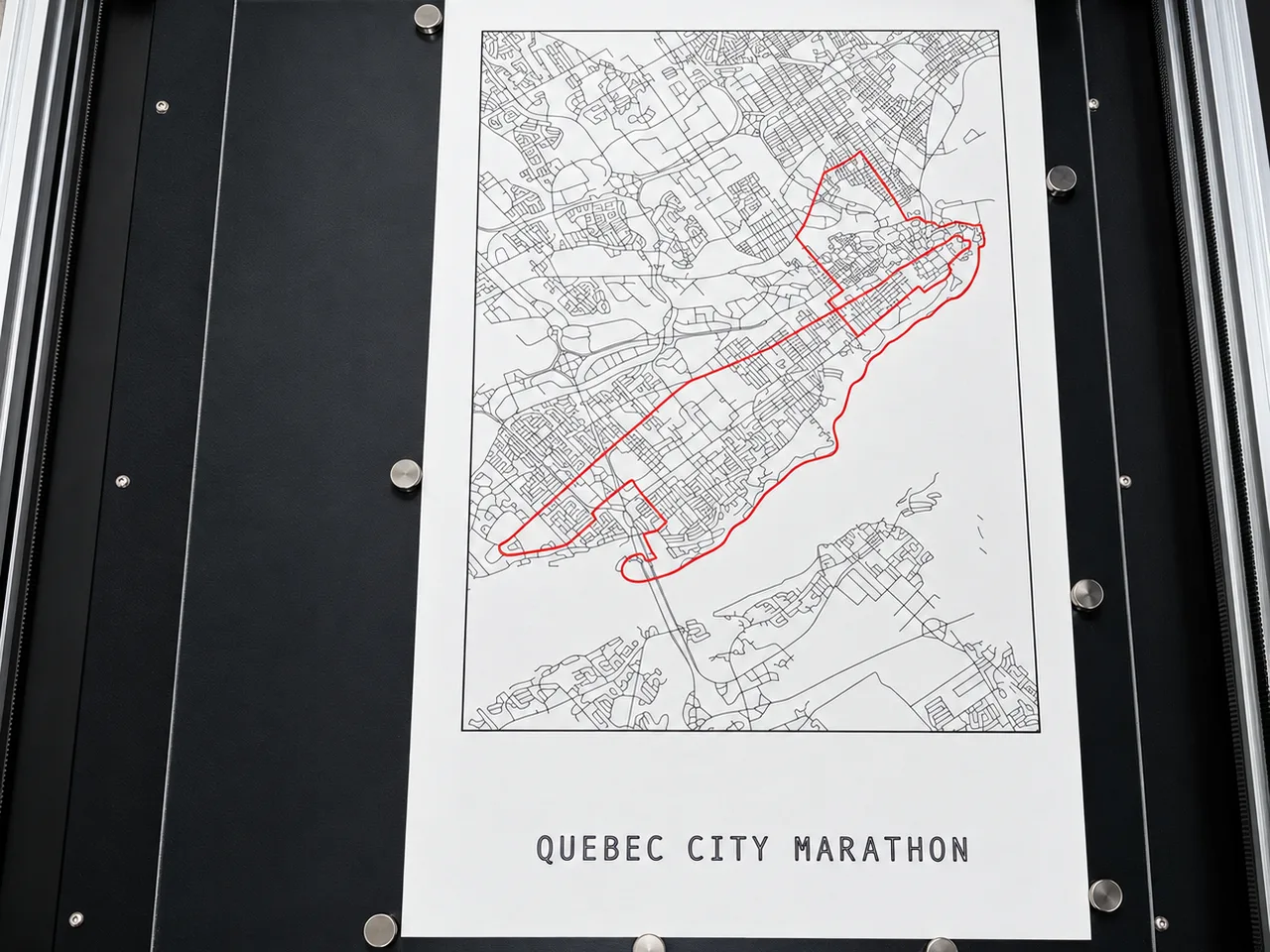
Your piece, plotted in pen
Your name and your time, plotted in ink under the title.
Production timelapse included
The timelapse of your piece being plotted, sent with your order.
Example timelapse — you get the one of your own piece.
A signature only UV light reveals
Serial number, year and Québec City, plotted on the back in UV ink.
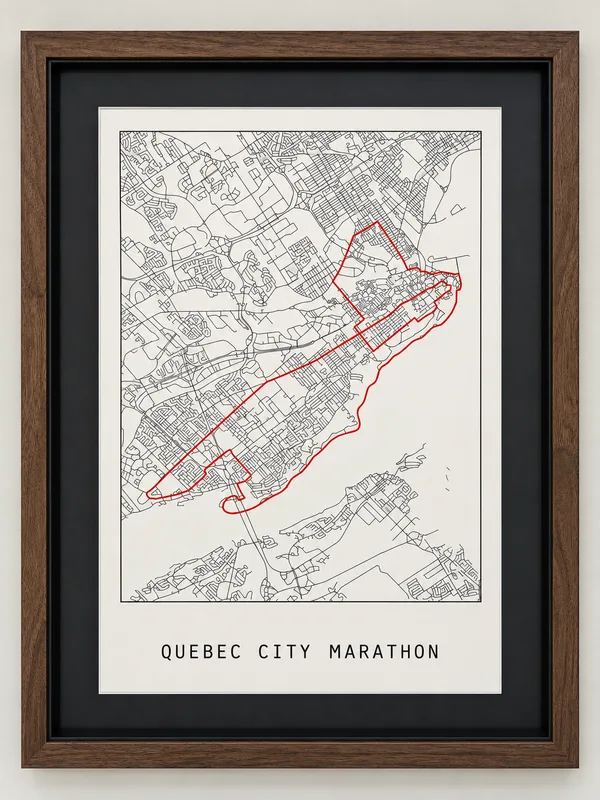
On your wall
Standard 11 × 17 in (27.9 × 43.2 cm): it fits any off-the-shelf frame, so you can pick the one that suits your space.
Frame not included.
A real process, not a printer
Each piece is physically plotted, pen on paper, in Québec City — watch the machine work.
Watch the process14-day returns
Real defects — shipping damage, wrong colour, missing lines — are replaced free of charge.
Read the policySecure checkout
Payments are processed by Stripe. CodeInk.art never sees or stores your card details.
Numbered and signed
A unique serial number and the date are plotted on the back in UV ink — invisible to the naked eye, laid down in the same pass as the drawing.
Independence
Independent artwork inspired by the event named above. CodeInk.art is not affiliated with or endorsed by the organizer.
General questions (size, frame, timelapse…) → The Process
Questions & Answers
Everything you need to know
> STATUS: RESOLVED
It is one of the five oldest and most prestigious one-day races, alongside the Tour of Flanders, Paris–Roubaix, Liège–Bastogne–Liège and Il Lombardia. Created in 1907, it is also the longest one-day race in modern professional cycling.
> STATUS: RESOLVED
The Passo del Turchino at mid-race, then the capi Mele, Cervo and Berta along the sea, and above all the Cipressa and the Poggio di Sanremo in the final 25 kilometres. The top of the Poggio is about 5.4 km from the finish.
> STATUS: RESOLVED
Eddy Merckx, with seven wins — the record for wins in a single classic. Costante Girardengo won it six times and took eleven podiums.
> STATUS: RESOLVED
It's the classic course starting in Milan, with the Turchino, the Riviera, the Cipressa and the Poggio. The start has moved in recent years (Abbiategrasso in 2023, then Pavia), but the soul of the race — the sea and the Poggio — is the same.
> STATUS: RESOLVED
Because it is raced in March and opens the spring classics. It is also known as « La Classicissima ».
> STATUS: RESOLVED
Yes: the final climb above Sanremo, then the descent to the finish. Its top is about 5.4 km from the line.
> STATUS: RESOLVED
Because it is a Milan-San Remo route with the Le Manie climb, added from 2008 to 2013 before the return to the sea. You can see it on the map, between the Turchino and the capi.
> STATUS: RESOLVED
Across the Lombard plain and Pavia, then Piedmont through Novi Ligure and Ovada, up to the Passo del Turchino, the highest point, where the race tips over into Liguria.
Don't see your race?
Request your gran fondo, ride or a personal route: we plot any course on request.