

NOT PRINTED
Drawn
Every line you see was physically deposited by a machine holding a real pen. No pixels. No shortcuts. No Command+P. This is what that looks like.
How it's made
01 — DESIGN
The blueprint is prepared as a precision vector file — every line, every data point, every dimension defined in code before a single drop of ink touches paper.
02 — SETUP
The robot is calibrated for the specific pen and paper. Pressure, speed, and path are configured. The cotton paper is fixed to the bed. Nothing is left to chance.
03 — DRAW
4 to 6 hours of continuous movement. The pen descends, traces, lifts, repositions. The robot draws at 80mm/second — slow enough to deposit ink properly into the fiber.
04 — SHIP
The piece is hand-inspected, signed, numbered, and shipped in archival packaging within 5–7 business days. Your name goes on the edition record permanently.
MEET THE
Machine
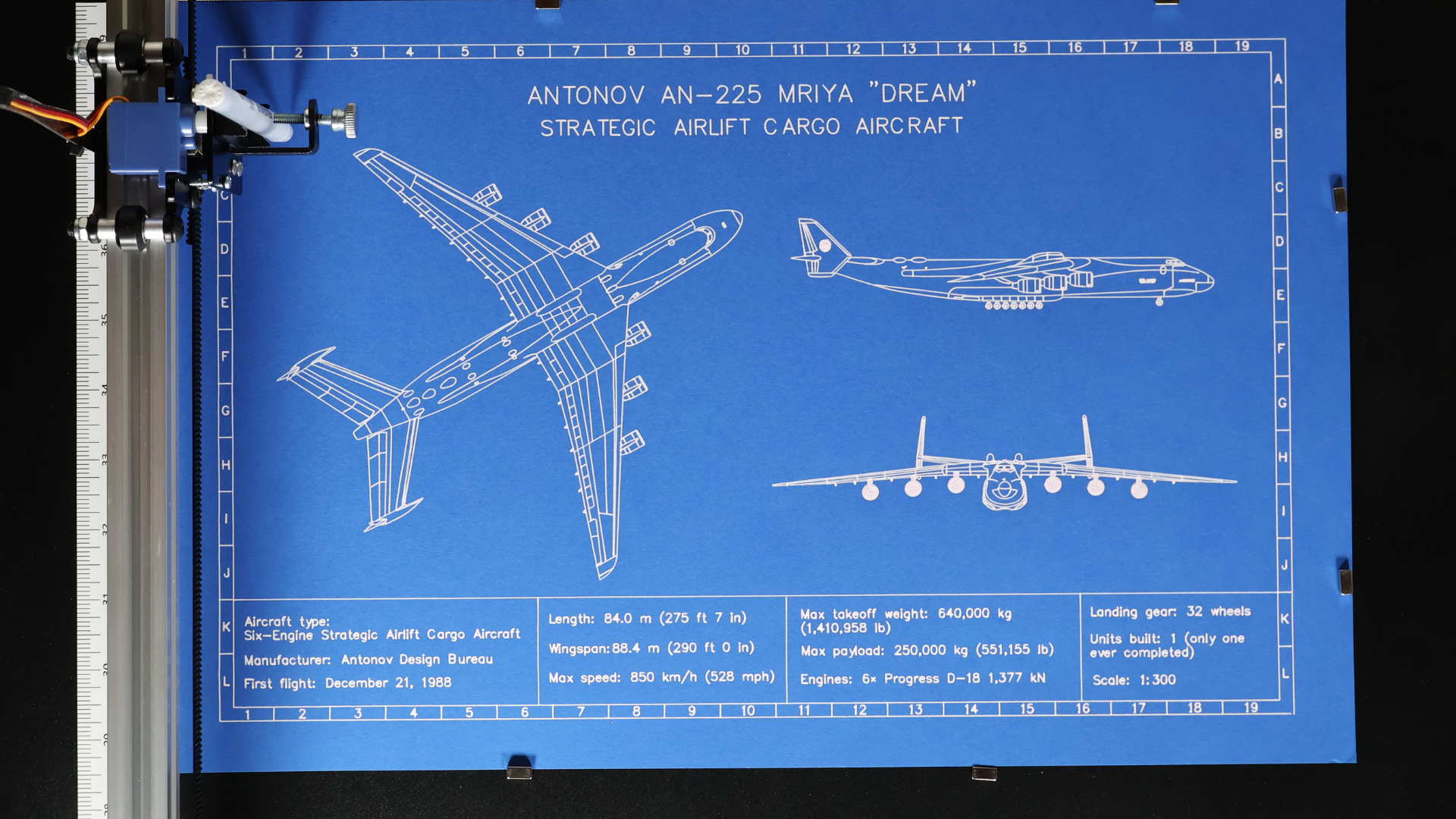
Our plotting robot holds a real Stabilo® archival pen and moves with sub-millimeter precision. It draws continuously for hours — slow enough to deposit ink properly into the cotton fiber, deliberate enough that every line has weight.
It doesn't think. It doesn't feel. It executes. And in that relentless execution — line after line, hour after hour — something almost human emerges.
Imperfect
PERFECTLY
No machine — not even ours — can produce two identical pieces. The slight variation in ink pressure as the pen moves across the paper. The micro-texture where fiber meets metal tip. The way ink pools imperceptibly at the start of each line.
Ink pressure variation creates subtle line weight differences — invisible at distance, visible up close.
Cotton fiber texture interacts differently with each pen pass — no two strokes are identical.
These are not defects. These are the signatures of a physical process. The proof it's real.